
Chitwan National Park: The Luxury Safari Most People Miss
Experience Chitwan National Park, Nepal's underrated luxury safari destination, featuring wildlife, expert guides, and beautiful jungle lodges.
Most people who travel for wildlife have a list. Kenya is usually first. Tanzania, Botswana, and South Africa come after. These are great destinations, and they deserve their reputation. But there is a place that almost never makes that list, not because it is not good enough, but because most travelers simply have not heard enough about it yet. Chitwan National Park in southern Nepal is one of the best places in Asia to see large wildlife in its natural habitat. The luxury lodges in Chitwan that border the park are comfortable, well-run, and genuinely impressive. And because the destination is still under the radar, the experience feels personal in a way that the most visited safari parks in the world no longer can.
Why Chitwan National Park Belongs on Your Safari List
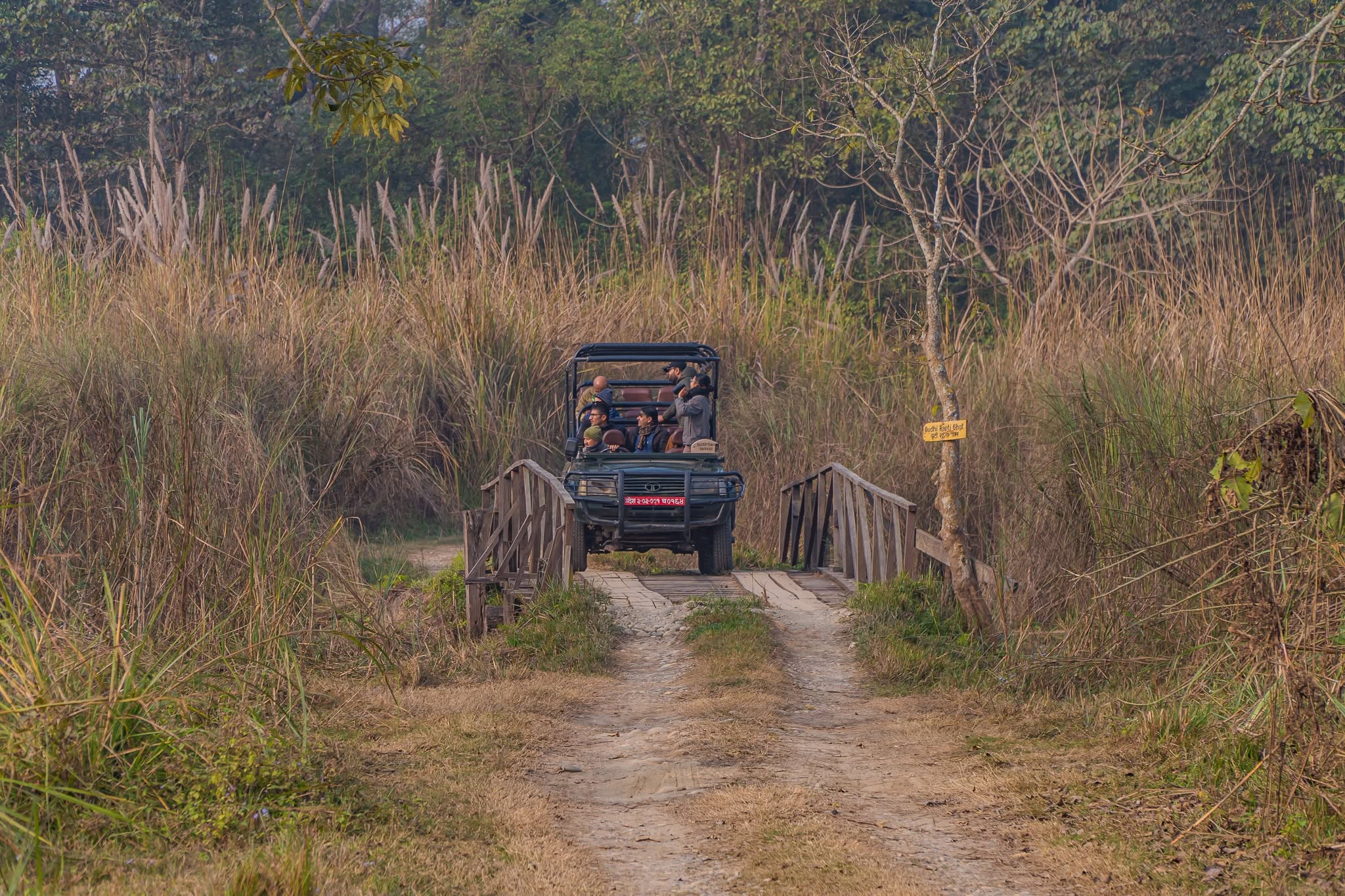
Deep jungle safari
Most people think of Nepal as a mountain destination. Peaks, trekking routes, high-altitude scenery. Chitwan National Park is something else entirely. It sits in the flat Terai lowlands in southern Nepal, close to the Indian border, and the landscape is warm, green, and dense with jungle. The park covers 952 square kilometers of subtropical forest, open grassland, oxbow lakes and riverside habitat. It became Nepal's first national park in 1973 and was recognized as a UNESCO World Heritage Site in 1984.
The park is compact enough that you are not spending half your day driving between areas. But it is varied enough that the scenery and wildlife change from one hour to the next. Riverine forest opens into grassland. Grassland leads to riverbanks. Each section of the park holds different animals, and good guides know exactly where to look depending on the time of day and the season.
Who This Trip Is For
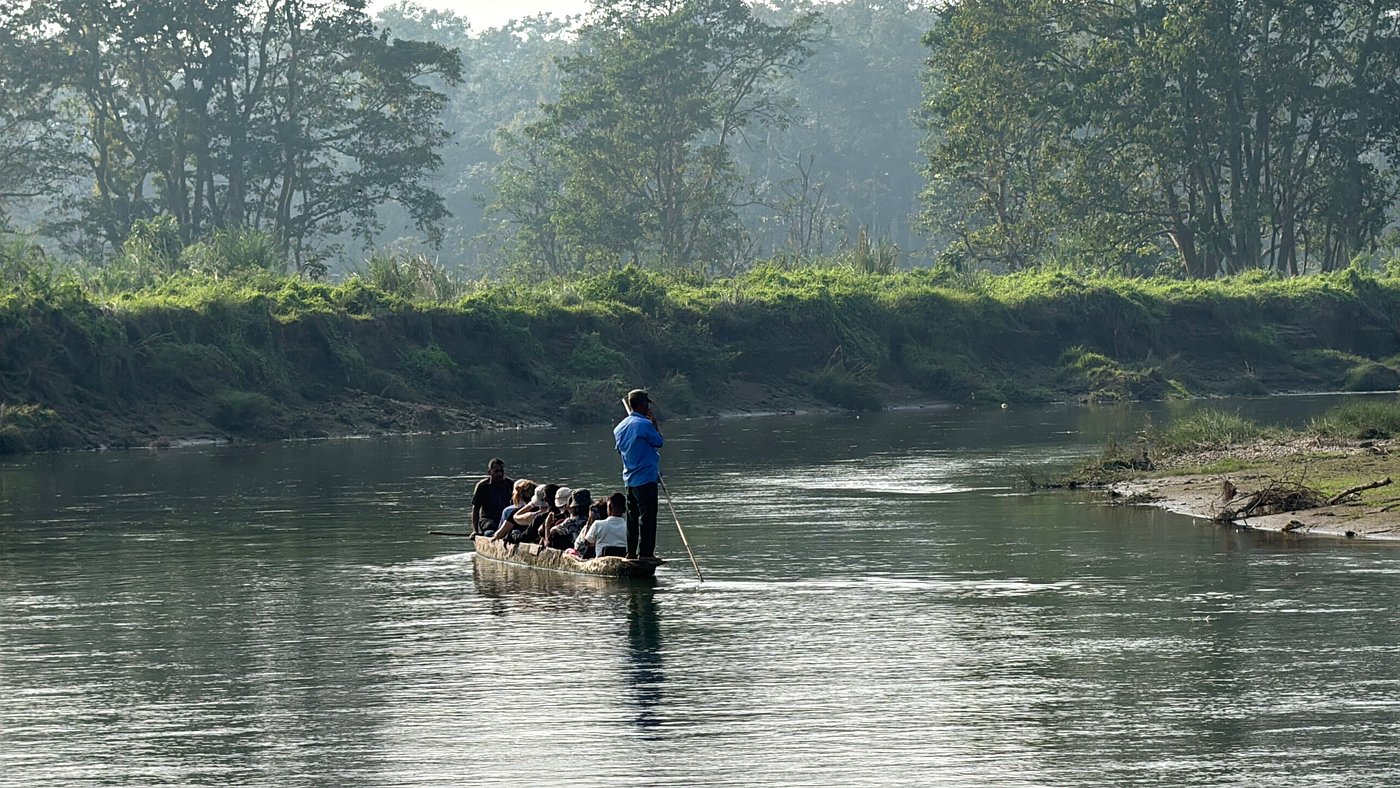
Friendly canoe trips with the tour guide
This is the right trip for someone who has already been to Africa and wants something different. A Nepal wildlife safari is not a step down from the African parks. It is a different experience with its own animals, its own jungle and its own character. The guiding in Chitwan is strong because the park has a long history of welcoming serious wildlife travelers. The best naturalists here track animals by reading sounds, tracks, and the behavior of other species around them. They do not rely on radio networks or tip-offs from other vehicles. And because international visitor numbers are still low compared to the major African parks, you are rarely sharing a sighting with a crowd. In many cases, you will be the only group in that part of the park.
The Wildlife You Come to See
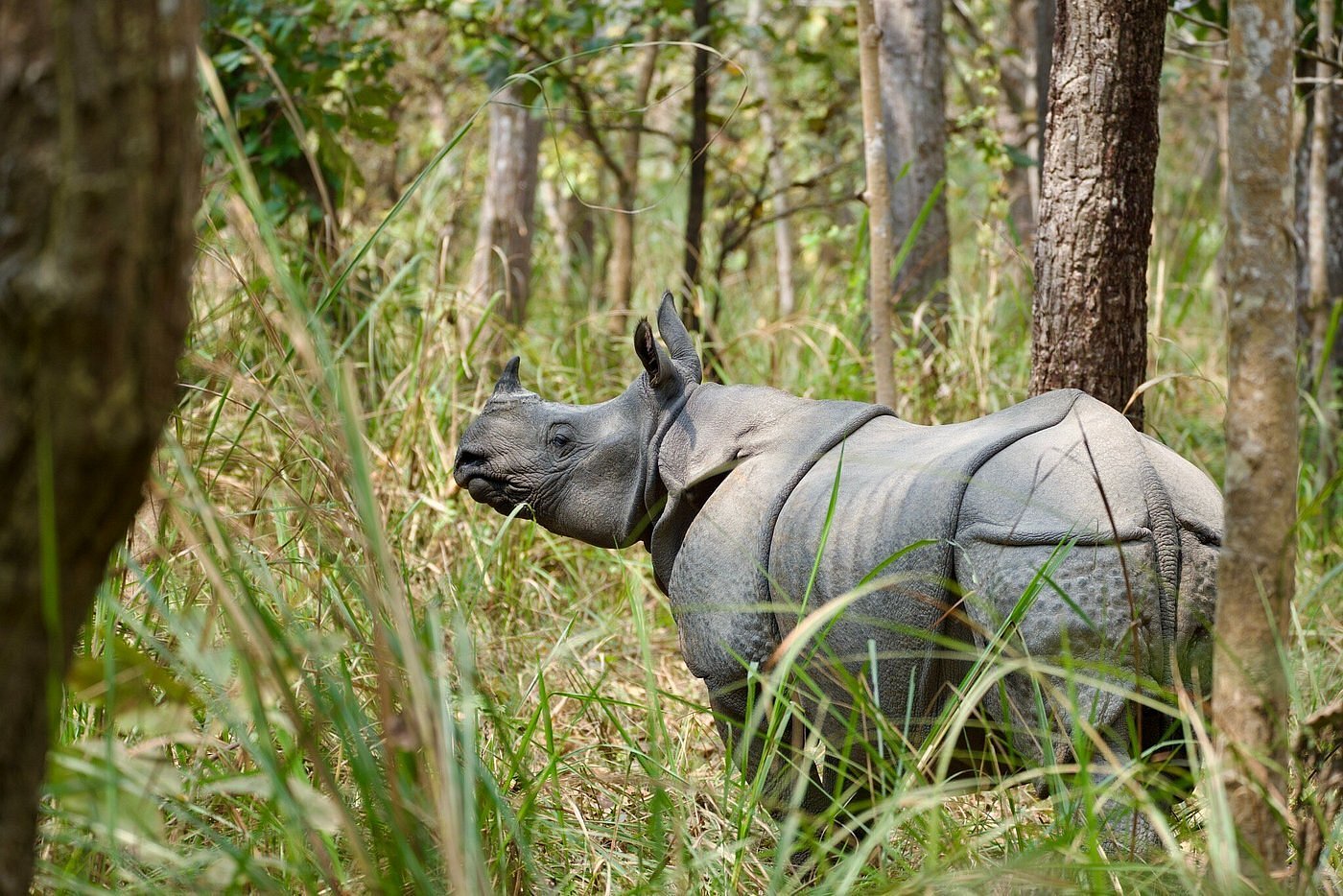
One horn rhino in Chitwan
The greater one-horned rhinoceros is the animal Chitwan is most known for, and the park holds one of the largest populations of this species left in the world. Sightings are common, particularly along the riverbanks and in the open grassland areas of the park interior. Seeing one up close is a clear highlight for most visitors.
Royal Bengal tigers are also present in the park. Spotting one depends on timing, conditions and the skill of your guide. A good naturalist will know when the signs are pointing in the right direction and how to position guests for the best chance. Even if a tiger sighting does not happen, learning how to read the forest for signs of one is an experience in itself.
Other animals commonly seen in Chitwan National Park include leopards, sloth bears, wild elephants, spotted deer, sambar deer, langur monkeys and wild boar. Along the Rapti and Narayani rivers, both gharial crocodiles and mugger crocodiles can be spotted resting on the banks. The gharial is critically endangered globally, which makes seeing them here significant. For people who enjoy birds, the park has recorded over 650 species, including the giant hornbill, the Bengal florican and multiple species of kingfisher. A Nepal wildlife safari for birdwatchers is hard to beat anywhere in Asia.
How the Park Has Been Protected
Chitwan National Park has one of the stronger wildlife recovery stories in Asia. The one-horned rhino population dropped to fewer than 100 animals in the early 1970s. Today, there are over 700. That recovery came from consistent anti-poaching efforts, careful land management, and meaningful involvement from local communities, particularly the Tharu people, who have lived alongside this jungle for generations. Tiger numbers have also grown steadily over the same period. The park's conservation record is not accidental. It is the result of decades of focused work, and both Sanctuary Resort and Barahi Jungle Lodge support that work directly through their operations.
Where to Stay
Sanctuary Resort Chitwan
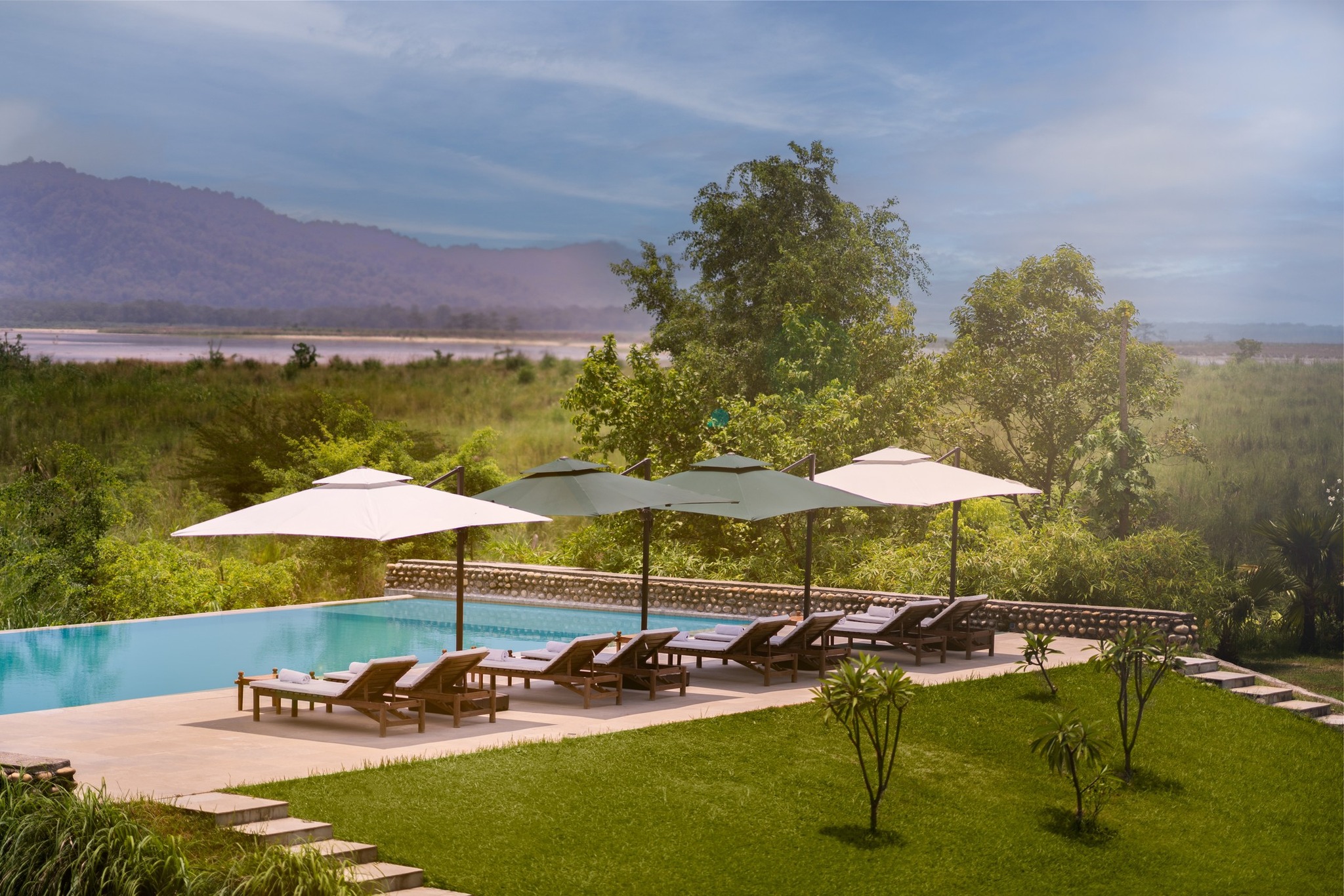
Sanctuary Resort sits on the western edge of Chitwan National Park in the Amaltari region, right along the banks of the Narayani River. The buildings are made from local stone and positioned to keep guests connected to the landscape outside. Rooms are large and comfortable, with wide verandas facing the tree line, proper bathtubs and good beds. The pool looks directly into the forest.
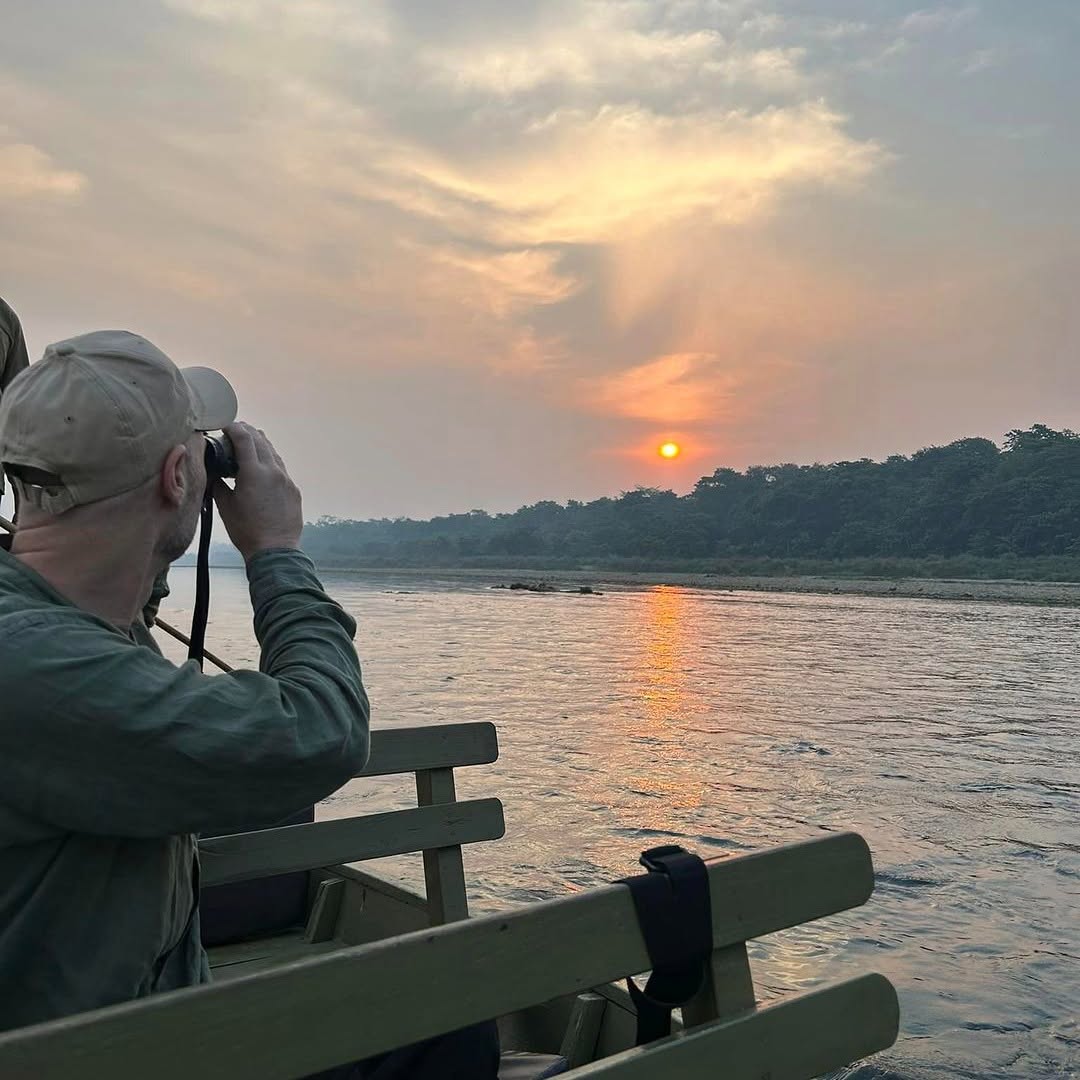
The safari program here is built around small groups. Guests stay with the same naturalist across all activities rather than meeting a different guide for each outing. That continuity makes a real difference. Jeep safaris go into the core park areas during the early morning and late afternoon when animals are most active. Guided walks move through the buffer zone at a slower pace, focusing on tracks, calls and smaller details that a vehicle cannot get close to. Early morning canoe trips on the Narayani River offer a quiet, low-level view of birds, crocodiles and animals coming to the water. Everything is arranged through the lodge, with no group scheduling to work around.
Barahi Jungle Lodge
.jpg)
Peaceful Barahi Jungle Lodge stay
Barahi Jungle Lodge sits on the northern boundary of the park, with the Rapti River in front and the forest directly behind. The lodge has a clear view across the river to the tree line where animals come down to drink at dusk. Accommodation is well-designed and comfortable, with rooms that open onto private decks with river views.
The guiding team at Barahi knows this section of the park in detail, which comes from years of daily time inside it. Safaris here include jeep drives, guided walks and river canoe trips, all arranged around the individual guest rather than a fixed group schedule. The lodge also arranges visits to the nearby Tharu cultural village, which adds important context to the wider Chitwan experience. The Tharu people have a very old relationship with this land, and spending time in their community is one of the parts of a Chitwan trip that stays with guests long after the wildlife sightings.
What a Day in Chitwan Looks Like
Morning, Midday and Afternoon
A luxury safari in Chitwan is built around two main periods when wildlife is active. Early morning is the best time to be out. The air is cooler, visibility is good, and animals are moving. Late afternoon is the second window, when the heat of midday has passed, and the forest comes back to life. Between those two windows, the best thing to do is rest. A long lunch, a cool shower, time on the veranda. The lodges here are designed for that kind of midday pause, and guests who lean into it tend to get more out of their morning and afternoon drives.
Jeep safaris cover the most ground and are the right format when grasses are high or when wildlife is spread across different habitats. Walking safaris slow everything down and teach guests how to read the park at ground level. Canoe trips on the river are quiet and relaxed, with excellent views of birds and crocodiles from the water. A good itinerary mixes all three rather than repeating the same format each day.
Chitwan's luxurious view
How Long to Stay
Chitwan rewards guests who stay for at least two full days. Three or four nights gives enough time for the park to feel familiar and for the experience to build across different conditions and habitats. One-day visits are possible but miss most of what makes the destination worthwhile.
Plan Your Chitwan Safari
Chitwan National Park is forty minutes from Kathmandu by air, with regular flights into Bharatpur Airport. It is also reachable by road in around five hours for travelers who want to see the change in landscape from the hills to the Terai.
For travelers ready to plan, Exposha offers two itineraries into this part of Nepal. A Front Row Seat to Chitwan's Wild Side is a four-night, five-day stay at Sanctuary Resort, covering jeep safaris, walking tours and river activities with private guiding throughout. Chitwan Wildlife Adventure is a two-night, three-day program at Barahi Jungle Lodge, designed for travelers adding Chitwan to a wider Nepal itinerary. Full details for both are available on the Exposha Luxury Safari Retreat page.
Chitwan is a destination that serious wildlife travelers are going to find eventually. The ones who go now will find it at its best.
Continue Reading
Discover more travel guides and inspiration for your next adventure
.jpg?format=avif&quality=60&width=3840)
Why Experiential Luxury Travel Is Replacing Traditional Five-Star Travel
Experiential Luxury Travel Is Replacing Traditional Five-Star Travel. This shift is fundamentally reshaping what premium travel looks like.
Read article.jpg?format=avif&quality=60&width=3840)
Top Attractions in Kerala for Tourists
Planning a trip to Kerala? Learn about the top attractions, cultural experiences, natural beauty, festivals, food, and wellness traditions.
Read article
Vietnam for Beginners: Everything to Know Before You Go
Discover when to visit, how long to stay, transportation tips, costs, safety advice, and cultural basics before your trip.
Read article